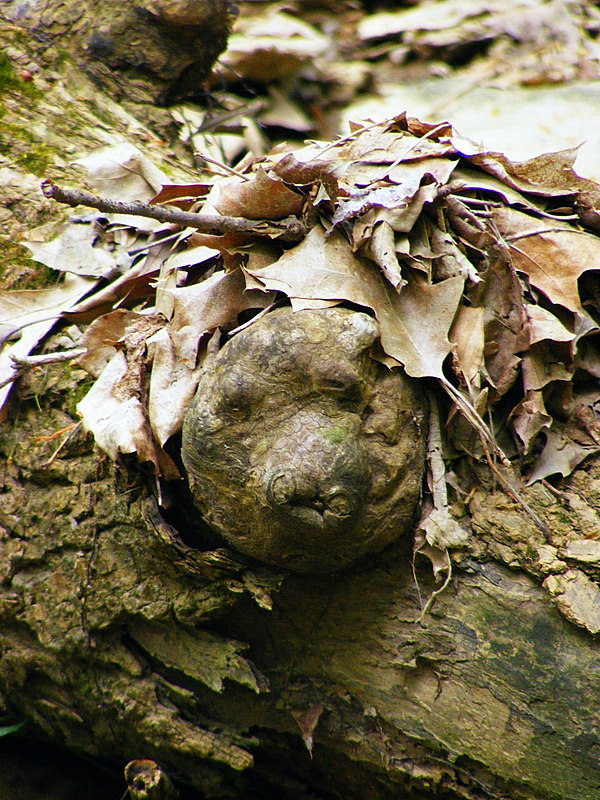
I'd planned to spend the rest of the weekend at home finishing my spring cleaning, but today was just too nice outside and I dropped everything this afternoon to get in a quick two and a half mile hike over at French Park. I'm glad I did; I heard reedy calls of Gnatcatchers several times and I also heard the first Red-Eyed Vireo and Hermit Thrush of the season. Larkspur and Blue-Eyed Mary were in bloom as well. Unfortunately, French Park seems to be a bit sparse on native wildflowers and heavy in the introduced and problematic Garlic Mustard; there was scads of it blooming on the hillsides. I guess deer don't care much for its flavor.
Showing posts with label recipes. Show all posts
Sunday, April 27, 2008
Weekend Report
I'd planned to spend the rest of the weekend at home finishing my spring cleaning, but today was just too nice outside and I dropped everything this afternoon to get in a quick two and a half mile hike over at French Park. I'm glad I did; I heard reedy calls of Gnatcatchers several times and I also heard the first Red-Eyed Vireo and Hermit Thrush of the season. Larkspur and Blue-Eyed Mary were in bloom as well. Unfortunately, French Park seems to be a bit sparse on native wildflowers and heavy in the introduced and problematic Garlic Mustard; there was scads of it blooming on the hillsides. I guess deer don't care much for its flavor.
Saturday, April 05, 2008
Posole and Hominy
Not only was it the first time I tried posole, but it was the first time I ever had hominy either. What can I say, I haven't spent much time in the American South. I really liked it and I'm sorry I missed out on it all these years. The texture surprised me somewhat. It kept its integrity throughout a rather lengthy cooking process - almost more like a bean; fresh sweet corn wouldn't have held up nearly so well after cooking for two hours in a dutch oven.
Hominy is dried maize which has been treated with an alkali to remove its tough outer hull, through a process known as nixtamalization. Nixtamalization has been practiced since at least 1200 BC, the earliest archaeological evidence having been found in Guatemala. The process is crucial to not only removing the tough outer hull, but to unlocking the nutrients within the large, starchy grain. Alton Brown's episode of Good Eats - Tort(illa) Reform talked about this process in some detail and a portion of the transcript follows:
Transcript courtesy of Good Eats Fan Page
Once upon a time in 1519, a certain Spanish businessman/adventurer named Hernando Cortez landed in what is today Veracruz, Mexico. Why? Because he had a serious hankering for gold, which he soon found heaps of in the Aztec city-state of Tenochtitlán, which was, at the time, probably the most splendid city on earth.
Figuring he would be a far better steward of all that wealth, Cortez aided by cannons, horses, smallpox, and a legend that made him out to be a returning god, captured the city's ruler, Montezuma, and set about decimating one of the greatest civilizations our planet has ever hosted. Had Cortez stopped just for a moment to consider how it was that such heathen savages were able to erect such a bling-encrusted metropolis, he might have discovered a very different kind of gold altogether ...
SCENE 4
The Kitchen
GUEST: Deb Duchon, Nutritional Anthropologist
AB: ... maize. You know, the average Meso-American diet was very corny indeed. But unlike the sweet field corn we modern North American Anglos know and love, the stuff the Aztec lived on was very very starchy and came with a very thick outer hull, or pericarp, okay? Now, probably 10,000 years or so before Columbus showed up, these early Americans learned that if they...
DD: ... if they soaked and cooked the maize in water with wood ashes in it, that the hulls would just slip right off.
AB: You notice how I don't even have to think "nutritional anthropologist" anymore, and she shows up?
AB: Okay, I'll bite. What's with the wood ashes?
DD: They're alkaline, of course.
AB: Ah. Well, that certainly explains why, last summer, when I left all those ashes in my grill, and it rained a bunch, the bottom of the grill corroded out.
DD: I remember that. But today's Mexican cooks don't use wood ashes anymore. They use cal.
AB: Oh, short for calcium hydroxide, a.k.a. slaked lime. It's used in the construction business to help concrete harden.
DD: But the really fascinating thing about it was that the Meso-Americans thought they were just removing the pericarp, but what they were actually doing was setting in motion this miraculous and amazing phenomenon.
AB: I sure hope you're not about to launch into one of your long soliloquies without the benefit of a visual aid.
DD: Well, check this out then.
AB: Okay.
DD: The miracle of nixtamal... [DD clicks a remote and a large cage descends]
AB: Whoa. Wow, what a sweet visual metaphor representing the many nutrients locked away inside a kernel of corn. Hah, think I'll have a little proline. Hey, what gives? I can't get any of them out.
DD: Nixtamalization is like a chemical key that unlocks all the wonderful nutrients that are locked inside a kernel of maize.
AB: So what kind of nutrients are we talking about here?
DD: Well, for one thing, amino acids like lysine and tryptophan. But most importantly, vitamin B3 better known as niacin. Now if the Aztecs hadn't had nixtamalization, they wouldn't even have the energy to build that magnificent empire of theirs. And once Cortez showed up, he probably wouldn't even have paid much attention to them. He certainly had no reason to destroy their empire like he did.
AB: Got it.
DD: But in a way, they got their revenge, because when Cortez and the other conquistadores brought maize back to the Old World, they didn't take nixtamalization.
AB: Yeah.
DD: So the countries and peoples that adopted corn as their main grain soon suffered from a terrible disease of malnutrition called pellagra.
AB: What's pellagra do?
DD: The three dreaded Ds: diarrhea, dementia, and death.
AB: Well, I guess that's Montezuma's real revenge.
Labels:
Alton Brown,
cooking,
corn,
food,
history,
hominy,
nutrional anthropology,
pork,
recipes
Monday, February 18, 2008
Fava Bean Love
So, it turns out I actually like fava beans, when they're prepared properly. It seems I somehow missed the fact that the beans have a tough, leathery skin that needs to be removed before eating. No wonder I didn't like them before. I'm amazed that more recipes for fava beans don't mention this rather crucial fact and I feel a bit of an idiot for not figuring it out for myself sooner. I only cottoned on after I read a thread on Chowhound regarding favas. By the way, Chowhound is an excellent resource for anyone with cooking and/or food questions. Now that they've fixed the thread search function you can get all sorts of useful information.I soaked the beans overnight in plenty of water, then removed the skins. They came off quite easily after soaking. After that I followed this recipe for ful medames and the result was quite delicious, in my humble opinion.
Fava beans are Europe's only indigenous bean and have been cultivated since the Iron Age. In ancient Greece and Rome, fava beans were used in voting; a black bean represented a 'no' vote, with a white bean indicating a 'yes' vote. The 6th century B.C. Greek philosopher Pythagoras (he of the Pythagorean theorem) reviled the fava bean and forbade his followers from eating them. He thought that the beans contained the souls of the dead. His superstitious dread may have resulted from witnessing favism, which is a hereditary disease. Individuals who lack the gene for producing the enzyme G6PD (which assists in oxygenating red blood cells) risk severe illness and even death by kidney failure and hemolytic anemia after eating fava beans. The genetic susceptibility to death by fava bean is most concentrated in Mediterranean populations; the vast majority of people have nothing to worry about when eating fava beans. Which is fortunate, as they are quite tasty when handled correctly.
Photo from benketaro on Flickr
Labels:
cooking,
food,
history,
interesting,
life as I know it,
recipes,
vegetables
Tuesday, January 15, 2008
Crock Pot Oatmeal
This is by far the best oatmeal I've ever made. I'm not really a big fan of oatmeal, but it's so darn good for the body, I keep trying to find ways of making it more interesting. I adapted this recipe from one in Vegetarian Times:
Note to self: treating the crock pot with cooking spray will speed clean up a great deal.
I am somewhat intrigued by the plans for the world's first vertical farm to be built in Las Vegas. On one hand, it doesn't strike me as being very ecologically friendly. Then again, water could be re-circulated and I suppose sunlight could be directed into the interior levels with a system of mirrors. The article doesn't provide those sorts of details except to say the design details would be worked out this year. I'd certainly visit it should I ever find myself in Vegas.
Crock Pot Oatmeal
- 1 3/4 cups steel cut oatmeal (not regular, instant or old fashioned please)
- 4 cups Silk Light Vanilla Soy Milk
- 1/2 cup maple syrup
- 1/2 cup unsweetened dried cranberries
- 1 teaspoon pumpkin pie spice
- 1/2 teaspoon salt
- Combine all the ingredients in a crock pot and cook on high for about three hours. Don't let this cook too long; if it over-cooks it will become hard as a rock and inedible. Four hours in my crock pot was just a bit too long; it was on its way to petrifying.
- Leftovers re-warm in the microwave just fine if you add a little water. I've been adding a handful of fresh blueberries too.
Note to self: treating the crock pot with cooking spray will speed clean up a great deal.
I am somewhat intrigued by the plans for the world's first vertical farm to be built in Las Vegas. On one hand, it doesn't strike me as being very ecologically friendly. Then again, water could be re-circulated and I suppose sunlight could be directed into the interior levels with a system of mirrors. The article doesn't provide those sorts of details except to say the design details would be worked out this year. I'd certainly visit it should I ever find myself in Vegas.
Monday, January 07, 2008
65 Degrees in January
I did not call in sick today, though it was awfully difficult not to with the weather being such a temptress. I managed to get out of the office once for a brisk walk in the parking lot (five times around the building equals one mile.) I left the office early and dashed over to Sharon Woods to get in a quick walk around the lake before dark. I was nearly caught speeding in my car past a park patrol officer, but slowed down in time to escape notice. Which is a good thing, because getting a speeding ticket for being in a hurry to take a walk would be really embarrassing.
Yesterday I cooked a nice casserole, which I brought for lunch today. I received the recipe in an email from Vegetarian Times. It's called Three Sisters Casserole (it needs a hot chili or two in the filling) and the name is derived from the staple Native American crops of corn (or maize), beans and squash. The corn was planted in a small mound and would serve as a living pole for the support of the bean vines while the squash grew at the base, its large leaves acting as living mulch to keep out weeds.
I never stopped to wonder why the corn I see in the Ohio fields these years is not as tall as the corn I saw on my way to school in the sixties and seventies. I had assumed it was the usual distortion of time and age, a product of me remembering the corn as taller than it actually was. But according to Bill Bryson, the corn grown today in the Midwest today is a shorter and better producing hybrid. I've never been to a corn maze, but I wonder if the farmers who create them grow the old ten foot tall varieties of corn especially for their labyrinths.
Yesterday I cooked a nice casserole, which I brought for lunch today. I received the recipe in an email from Vegetarian Times. It's called Three Sisters Casserole (it needs a hot chili or two in the filling) and the name is derived from the staple Native American crops of corn (or maize), beans and squash. The corn was planted in a small mound and would serve as a living pole for the support of the bean vines while the squash grew at the base, its large leaves acting as living mulch to keep out weeds.
I never stopped to wonder why the corn I see in the Ohio fields these years is not as tall as the corn I saw on my way to school in the sixties and seventies. I had assumed it was the usual distortion of time and age, a product of me remembering the corn as taller than it actually was. But according to Bill Bryson, the corn grown today in the Midwest today is a shorter and better producing hybrid. I've never been to a corn maze, but I wonder if the farmers who create them grow the old ten foot tall varieties of corn especially for their labyrinths.
Sunday, January 06, 2008
Forecast: Dreary
It's amazing how much just getting outside can lift my spirits. I felt sluggish and kind of blue when I woke this morning, but I put on my backpack and boots, grabbed my camera and headed outside anyway. I walked about two and a half miles around Glenwood Gardens, got a few good snaps and was entirely revitalized by the time I got home.
Tonight I made Sunchokes, otherwise known as Jeruselum Artichokes for the first time. They are a knobbly tuber from a type of sunflower. They are hard to peel because of their irregular shape and though some websites advised not peeling them at all, I thought the skin was too unappealing to leave in place. So I boiled a pound of them in their skins for about 25 minutes until I could poke a fork in easily, let cool, peeled, sliced and put them in an oiled pie dish. Then I sprinkled them with a quarter cup of Parmesan cheese, dotted with butter and baked at 400 degrees for twenty minutes until the cheese was a bit browned.
They were really good; a lot like potato but with a faint artichoke flavor. I'll definitely bring them home again.
Tonight I made Sunchokes, otherwise known as Jeruselum Artichokes for the first time. They are a knobbly tuber from a type of sunflower. They are hard to peel because of their irregular shape and though some websites advised not peeling them at all, I thought the skin was too unappealing to leave in place. So I boiled a pound of them in their skins for about 25 minutes until I could poke a fork in easily, let cool, peeled, sliced and put them in an oiled pie dish. Then I sprinkled them with a quarter cup of Parmesan cheese, dotted with butter and baked at 400 degrees for twenty minutes until the cheese was a bit browned.
They were really good; a lot like potato but with a faint artichoke flavor. I'll definitely bring them home again.
Tuesday, January 01, 2008
Before I go to bed
The Good Luck Soup turned out to be all kinds of awesome. Yum. I made the following changes to the recipe:
Note to self: your money is in stitches.
- I sauteed the vegetables in olive oil until soft and beginning to brown, before adding the stock and the beans.
- I didn't have dried chilies so I used cayenne instead, about a teaspoon's worth.
- I certainly didn't add any extra salt - it was salty enough from the ham hock.
Note to self: your money is in stitches.
Monday, December 31, 2007
Good Luck Soup
I'm making black eye pea soup today to eat tomorrow on New Year's Day. It is a southern American tradition to eat black eye peas on New Year's Day to bring luck and monetary good fortune in the coming year. I'm not so much superstitious as I am fond of black eye peas, though. The recipe I'm using is "Good Luck Soup" courtesy of Soup Song, which is a truly wonderful website in praise of all things soup. Hoppin' John (black eye peas and rice) is more traditional perhaps, but I'm not very good at making beans and rice.
Good Luck Soup
Good Luck Soup
- 1 pound dried black-eyed peas (they don't need to be soaked)
- 8 cups chicken stock
- 1 ham hock
- 1/3rd pound smoked ham, cut into 1/2-inch cubes
- 2 medium yellow onions, chopped
- 1 green pepper, chopped
- 1 stalk celery, chopped
- 2 cloves garlic, minced
- 3 dried whole chili peppers (or 1/2 teaspoon ground cayenne pepper)
- 1 10-ounce package frozen cut okra, thawed (fresh okra, sliced, is fine)
- salt to taste
In a large soup pot, combine the peas, stock, ham hock, ham cubes, onions, pepper, celery, garlic, and chili peppers. Cover and bring to a boil over high heat, stirring occasionally. Reduce the heat to low, re-cover the pot, and simmer for 1 hour, stirring occasionally.
When the peas are tender, stir in the okra and salt to taste, bring back to a boil, then lower the heat and simmer, covered, for 30 more minutes. The soup should be thickening and you should stir it frequently to prevent scorching. Remove the cover and cook, stirring, until creamy thick--as much as 10 minutes.
If you are ready to serve, remove the ham hock and chilis and ladle into bowls. If you are saving to serve later, let cool in the pot, then refrigerate. Reheat carefully, stirring often, when preparing to serve.
ETA:I made the following changes to the recipe:- I sauteed the vegetables in olive oil until soft and beginning to brown, before adding the stock and the beans.
- I didn't have dried chilies so I used cayenne instead, about a teaspoon's worth.
- I certainly didn't add any extra salt - it was salty enough from the ham hock.
Subscribe to:
Posts (Atom)